New features of the surface-coupling framework in Underworld 2
Abstract
Coupling in Underworld 2 Underworld 2’s UWGeodynamic module enables the coupling of tectonics and surface processes models, most notably, with Underworld 2 handling the tectonics and Badlands (Salles, Ding, & Brocard, 2018) handling the surface processes. This coupling framework has been employed to study landscape evolution and topography in orogenic regions, including the Three Rivers region in Southeast Tibet (Lu et al., 2019), Southwestern North America (Bahadori et al., 2022), and subduct
Coupling in Underworld 2
Underworld 2’s UWGeodynamic module enables the coupling of tectonics and surface processes models, most notably, with Underworld 2 handling the tectonics and Badlands (Salles, Ding, & Brocard, 2018) handling the surface processes.
This coupling framework has been employed to study landscape evolution and topography in orogenic regions, including the Three Rivers region in Southeast Tibet (Lu et al., 2019), Southwestern North America (Bahadori et al., 2022), and subduction systems (Corcho et al., preprints, 2025).
Recently, we have added several new features to enhance the accuracy and efficiency of the coupling system. Details can be found in commits of Underworld v2.17.x, and the related Issue 723.
New Features:
A new method for passing the surface velocity field to Badlands
Improved documentation for functions used in coupling
Reduced reliance on XML files; synchronisation between Python input files and XML is streamlined
Fixes to ensure consistent time stepping between Badlands, Underworld, and strata file outputs
Here, we present two experiments demonstrating the new features. The scripts for these tests can be found in uwg-coupling-test. Try running the models with this live Binder!
L model test

Fig.1 Model initial setups (128 km * 64 km).
A toy model to demonstrate the new method for passing surface velocities to Badlands. The model consists of two materials—air and lithosphere—with an L-shaped initial topography (40 km height difference). The model uses a constant base pressure boundary condition to support the lithosphere pressure as if the extra L-shaped topography wasn’t there, i.e. only a layer cake initial topography. Free-slip boundary conditions are applied on all other sides; we enable gravity and let the model evolve, allowing the topography to relax.
We compare two methods for evaluating the velocity field passed from Underworld to Badlands:
Old Method: Velocity is sampled at the initial elevations of Badlands’ recGrid throughout the simulation (“basement” setting).
New Method: Velocity is evaluated at the dynamically changing surface elevation from the Badlands’ model, interpolated to grid points.
The old method can lead to mismatches between erosion/sediment files generated by Badlands and the evolving topography in Underworld, especially at high resolutions and with significant topographic relief.
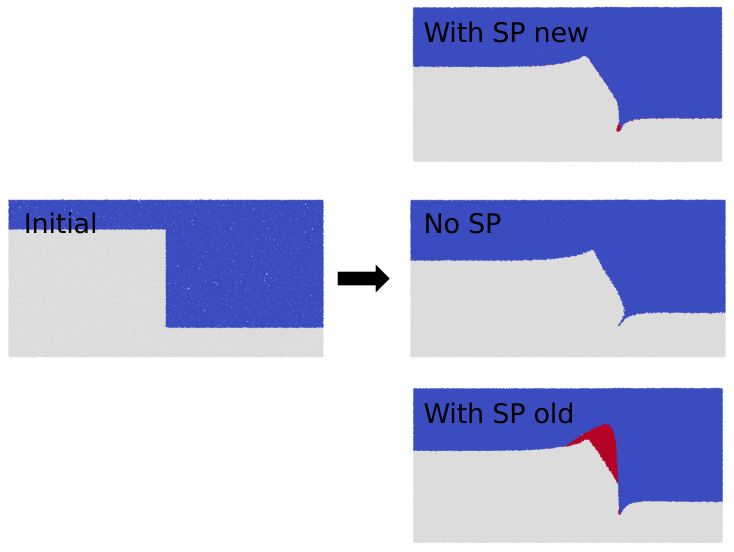
Fig.2 Model results.
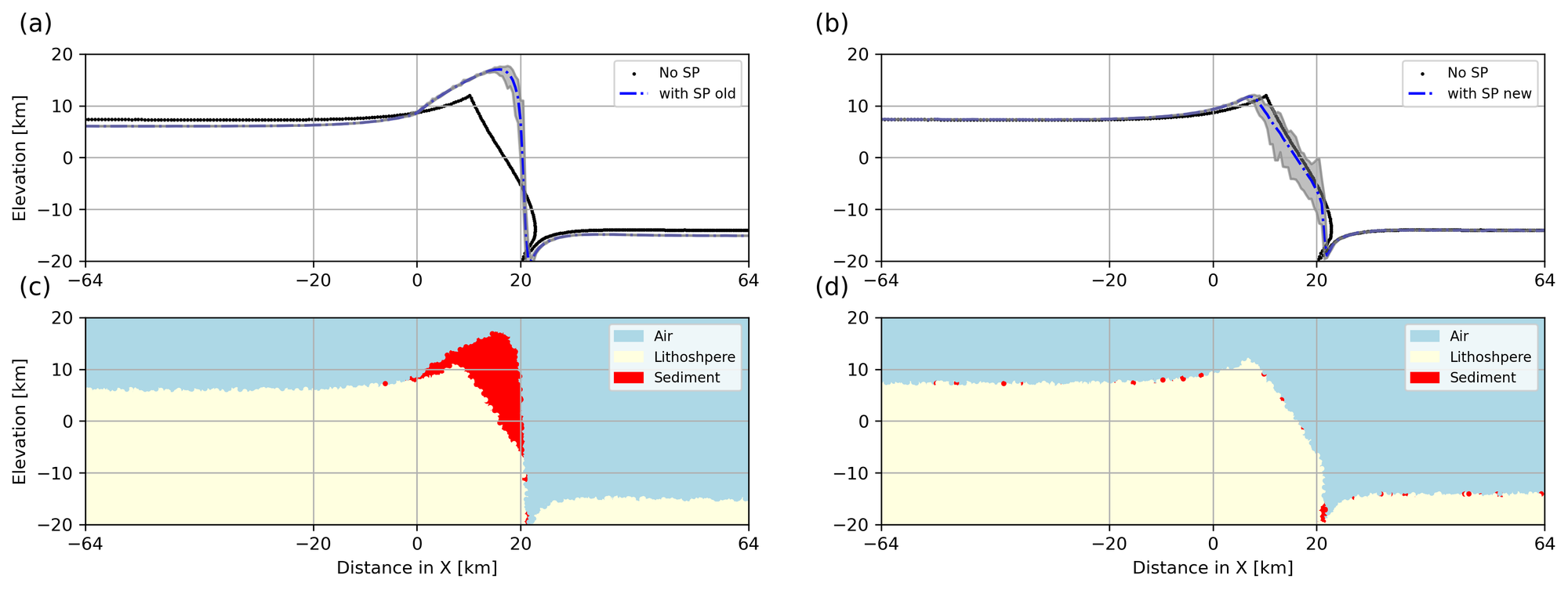
Fig.3 Topography and material distribution (cross-section view, left is from the old and right is from the new).
**Thrust Wedges **
This model is adapted from Tutorial 10 in UWGeodynamics, which explores the development of thrust sheets and accretionary wedges using visco-plastic rheologies. In this 2D model, the boundary conditions, initial conditions, geometry, and material properties are detailed in Ghosh, S., Bose, S., Mandal, N., & Laik, A. (2020). The new methodology enhances the realism of the topography and sedimentation processes.
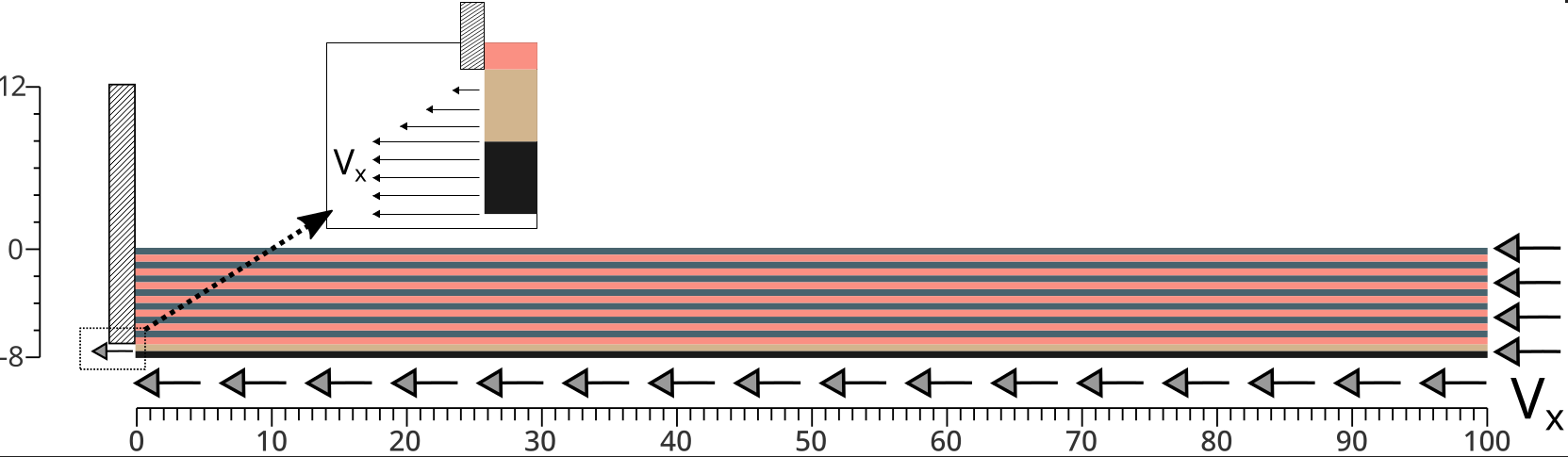
Fig.4 Model initial setups (128 km * 16 km).
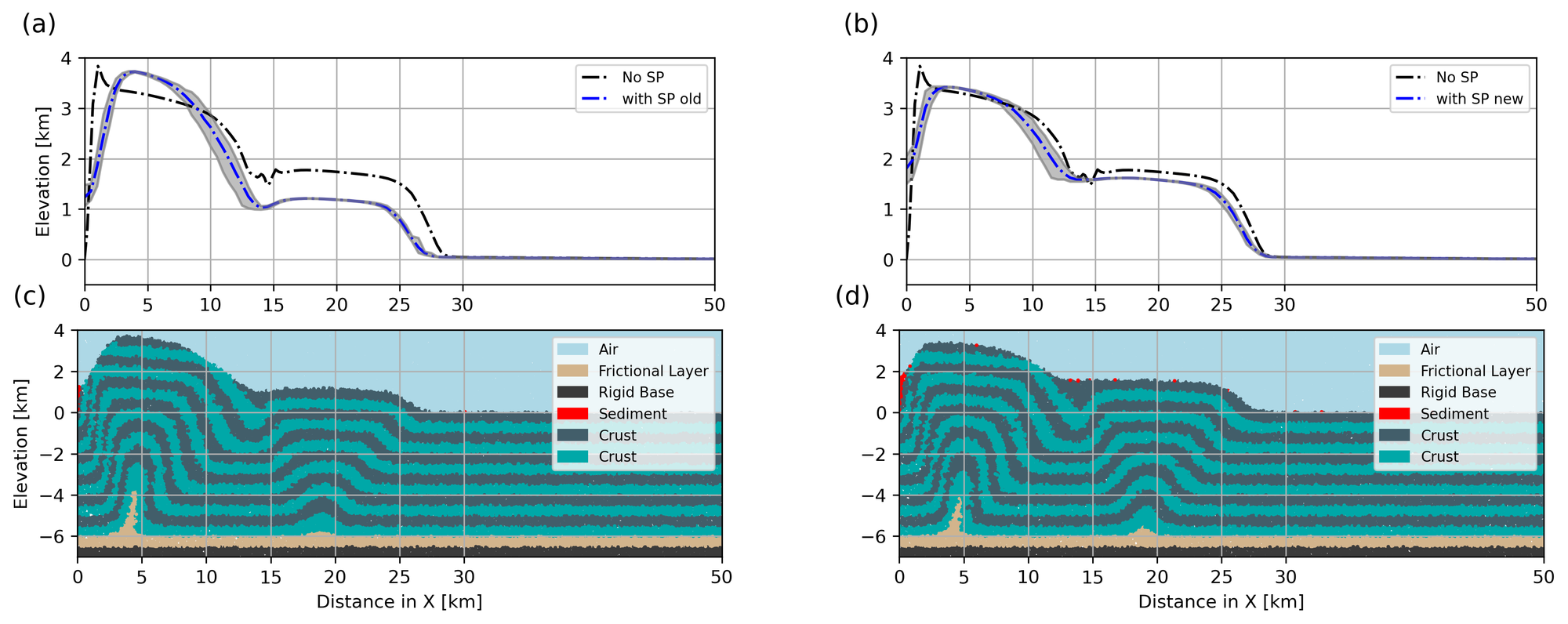
Fig.5 Topography and material distribution at Time = 1 Ma (cross-section view, left is from the old and right is from the new).
References
Beucher, R., Moresi, L., Giordani, J., Mansour, J., Sandiford, D., Farrington, R., ... & Morón, S. (2019). UWGeodynamics: A teaching and research tool for numerical geodynamic modelling. Journal of Open Source Software, 4(36), 1136.
Salles, T., Ding, X., & Brocard, G. (2018). pyBadlands: A framework to simulate sediment transport, landscape dynamics and basin stratigraphic evolution through space and time. PloS one, 13(4), e0195557.
Lu, N., Beucher, R., & Moresi, L. N. (2019, December). Coupled influence of tectonics and surface processes on the drainage evolution in collisional orogens: an example from the three rivers region in Southeast Tibet. In AGU Fall Meeting Abstracts (Vol. 2019, pp. EP31C-2292).
Bahadori, A., Holt, W. E., Feng, R., Austermann, J., Loughney, K. M., Salles, T., ... & Badgley, C. (2022). Coupled influence of tectonics, climate, and surface processes on landscape evolution in southwestern North America. Nature Communications, 13(1), 4437.
Corcho, A. F. R., Polanco, S., Farrington, R., & Moresi, L. (2025). Subduction system response to ribbon collision: implications on the intra-plate force balance and the style of slab deformation. Authorea Preprints.
Ghosh, S., Bose, S., Mandal, N., & Laik, A. (2020). Mid-crustal ramping of the Main Himalayan Thrust in Nepal to Bhutan Himalaya: New insights from analogue and numerical experiments. Tectonophysics, 782, 228425.